
Explainer · Not first-hand reporting
The Current State: Electric Traction Motors
By Scott Bradford · October 30, 2023
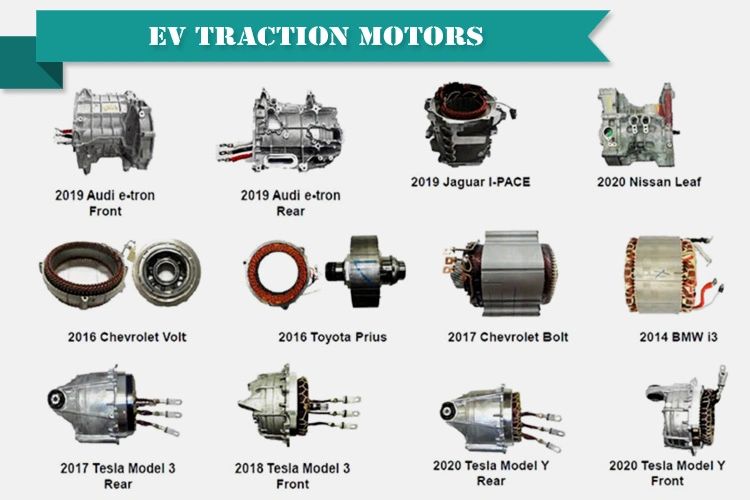
Electric Traction Motors: A Comprehensive Overview
Electric traction motors are used to power a wide range of vehicles, from electric locomotives and trains to electric cars and buses. They are also used in some industrial applications, such as cranes and forklifts.
There are three main types of electric traction motors:
- DC traction motors
- AC induction motors
- Permanent magnet synchronous motors (PMSM)
DC traction motors
DC traction motors are the oldest type of electric traction motor, and they are still widely used today. They are relatively simple to manufacture and control, and they offer good performance at all speeds.
DC traction motors are typically series-wound, which means that the armature and field windings are connected in series. This gives the motor a high starting torque, which is important for traction applications. DC traction motors can also be shunt-wound, which gives them better speed regulation.
DC traction motors are typically used in vehicles that require high starting torque and good low-speed performance, such as electric locomotives and trains.
Advantages of DC traction motors:
- Simple to manufacture and control
- Good performance at all speeds
- High starting torque
Disadvantages of DC traction motors:
- Relatively heavy
- Requires brushes and commutator, which can require maintenance
AC induction motors
AC induction motors are more modern than DC traction motors, and they offer a number of advantages, including lighter weight, lower cost, and greater reliability. However, they are more difficult to control than DC traction motors, and they do not perform as well at low speeds.
AC induction motors are typically squirrel-cage type, which means that the rotor is a solid cylinder of aluminum or copper. This gives the motor a simple and robust construction. AC induction motors are also typically three-phase motors, which means that they require a three-phase AC power supply.
AC induction motors are typically used in vehicles that require low weight and cost, and that do not require high starting torque or good low-speed performance, such as electric cars and buses.
Advantages of AC induction motors:
- Lighter and less expensive than DC traction motors
- More reliable
- Simpler construction
Disadvantages of AC induction motors:
- More difficult to control than DC traction motors
- Do not perform as well at low speeds
Permanent magnet synchronous motors (PMSM)
PMSMs are the most modern type of electric traction motor, and they offer a number of advantages over DC and AC induction motors, including higher efficiency, lighter weight, and smaller size. However, they are more expensive to manufacture.
PMSMs use permanent magnets in the rotor instead of copper windings. This eliminates the need for brushes and a commutator, which reduces maintenance requirements. PMSMs are also very efficient, with efficiencies of up to 98% being possible.
PMSMs are typically used in vehicles where high efficiency and performance are required, such as electric sports cars and hybrid vehicles.
Advantages of PMSMs:
- Higher efficiency than DC and AC induction motors
- Lighter and smaller than DC and AC induction motors
- Lower maintenance requirements
Disadvantages of PMSMs:
- More expensive to manufacture than DC and AC induction motors
Conclusion
The type of electric traction motor that is best suited for a particular application will depend on a number of factors, including the required power output, weight constraints, efficiency requirements, and budget.
DC traction motors are a good choice for applications where low-speed performance is important, such as electric locomotives and trains. AC induction motors are a good choice for applications where weight and cost are important, such as electric cars and buses. PMSMs are a good choice for applications where high efficiency and performance are required, such as electric sports cars and hybrid vehicles.
Additional considerations
In addition to the power, weight, efficiency, cost, and materials used, there are a number of other factors that should be considered when selecting an electric traction motor for a particular application, such as:
- Torque-speed characteristics: The torque-speed characteristics of the motor should be matched to the requirements of the application. For example, a vehicle that requires high starting torque will need a motor with a high torque-speed ratio.
- Cooling requirements: Electric traction motors can generate a lot of heat, so it is important to select a motor with adequate cooling capabilities.
- Noise level: Electric traction motors can be noisy, so it is important to select a motor that meets the noise requirements of the application.
- Durability: Electric traction motors must be able to withstand the harsh environmental conditions in which they are often used.
I hope this comprehensive overview of electric traction motors is helpful. Components101 has a great article going into more detail of how the different types of TEV traction motors function.